
For cultural organisations:
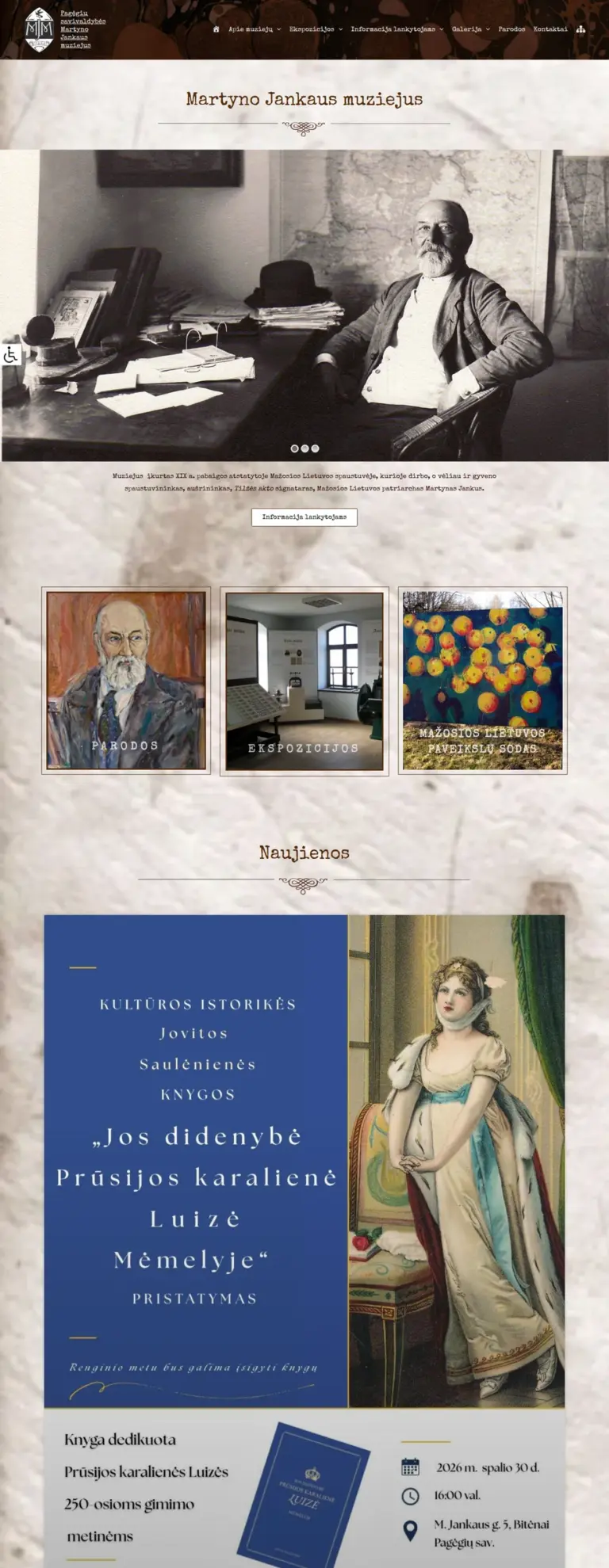
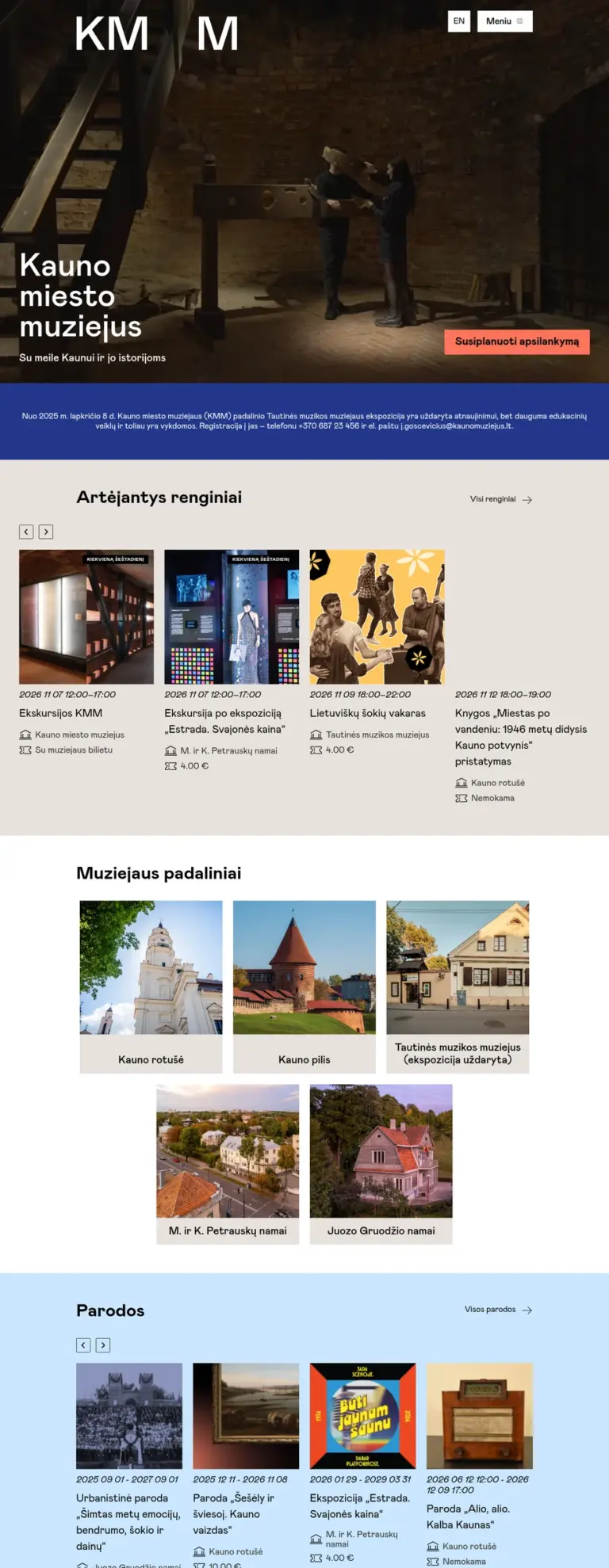
Website development for museums
We build museum websites where exhibitions, collections, events and educational programmes are presented clearly, and your team can manage the content itself while meeting accessibility, GDPR and public-sector requirements.
Experience building websites for organisations that value clarity, accessibility and orderly content management
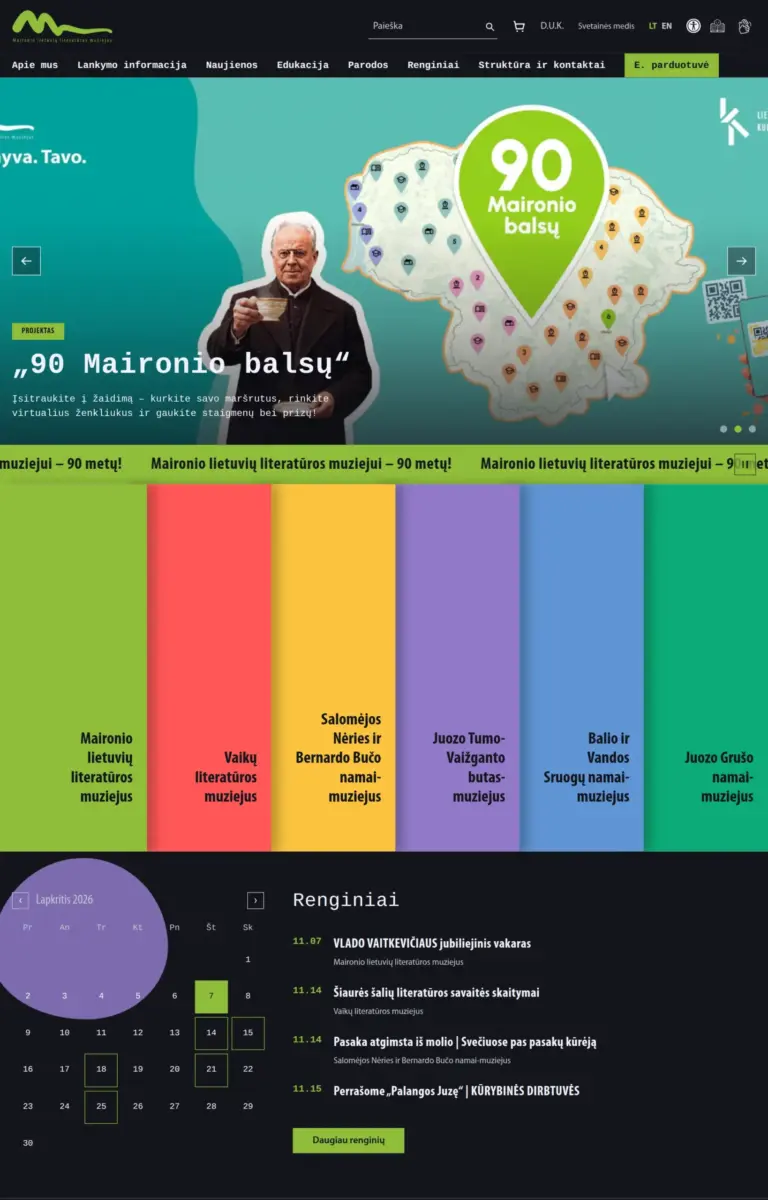
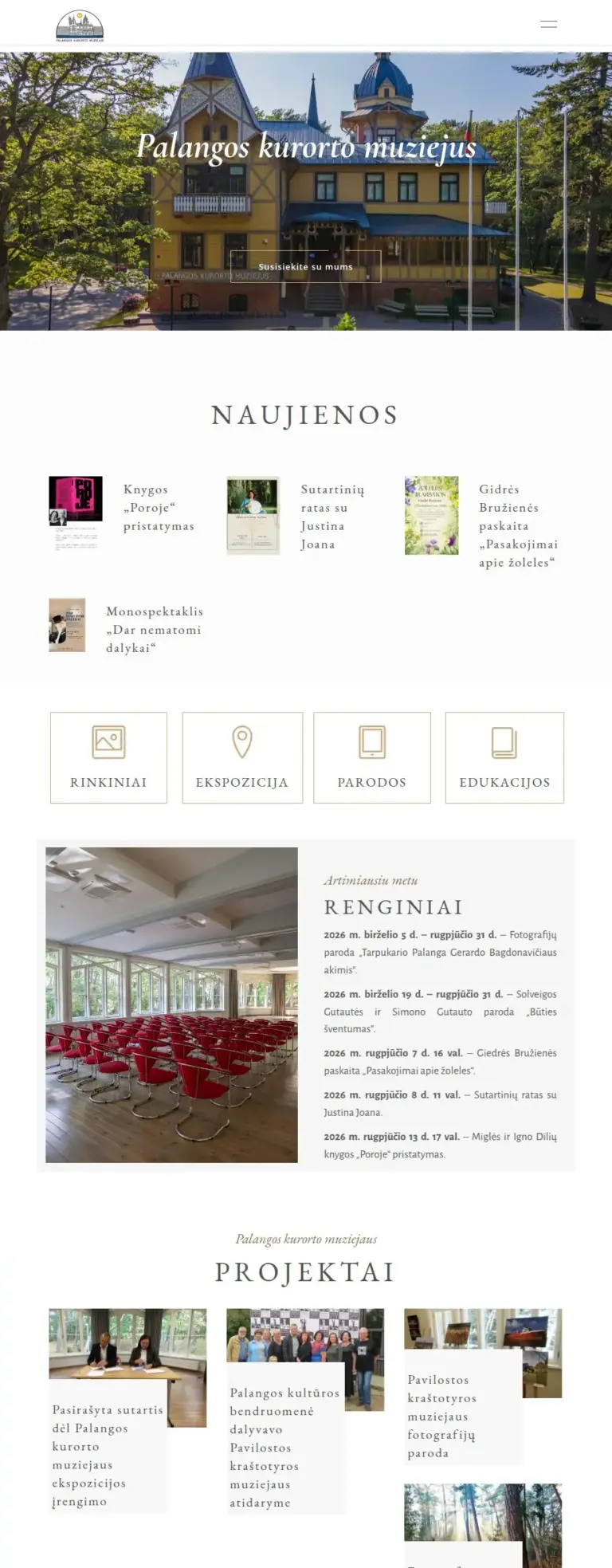
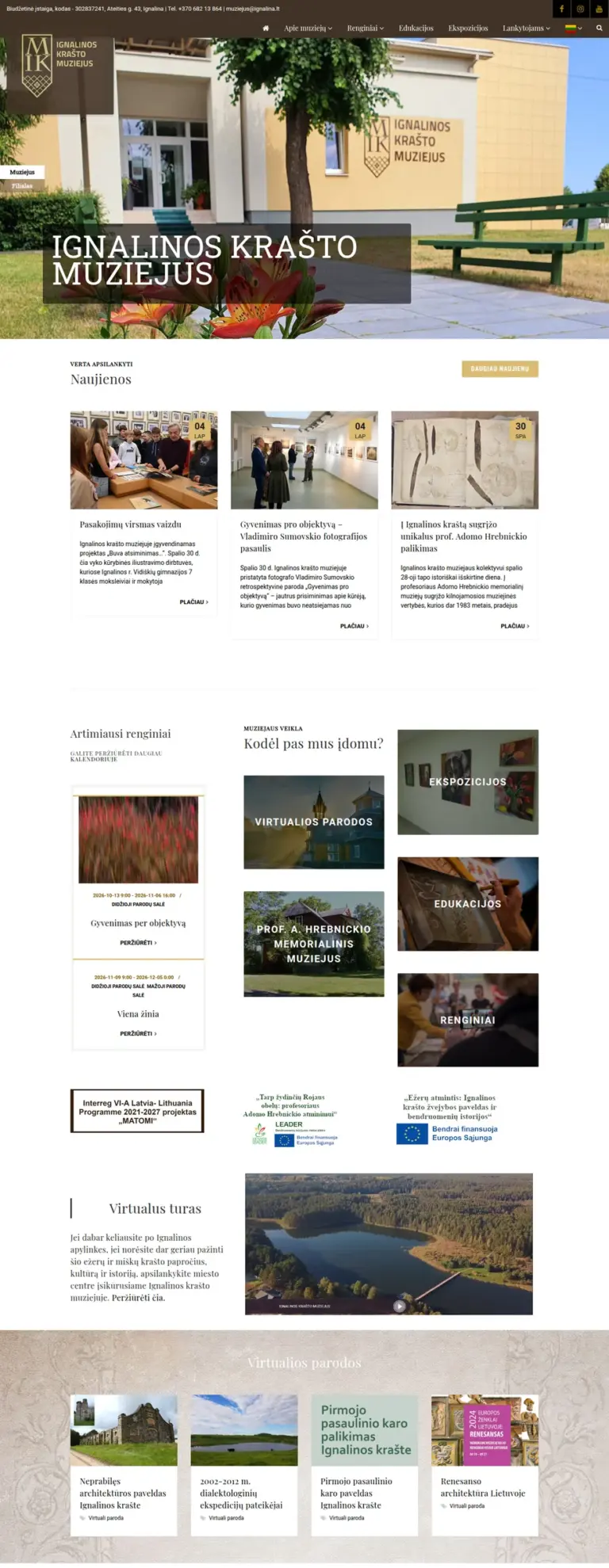
A museum’s website should not be just a business card. It has to help visitors quickly find out opening hours, tickets, exhibitions and educational programmes, and help staff upload news, update the programme or take registrations without IT help. We prepare a museum’s website so that it is easy to use, designed to WCAG 2.1 AA principles and secure when working with personal data.
- 8yearsof experience – since 2018
- 30+tools deployed for organisations
- 24monthswarranty on completed work
Most common problems
Exhibition and event information goes out of date too quickly
When opening hours, ticket prices, guided tours or event dates are changed separately in several places, inaccuracies creep onto the website. Visitors see old information, and the team has to fix small but annoying mistakes.
Collections are hard to present in a way that makes sense
For a museum it is important to show not only a photo of an exhibit but also its history, dating, creator and its link to a collection or exhibition. When the website is not set up for this, the content becomes fragmented and visitors find it hard to make sense of it.
The ticket and registration path becomes confusing for visitors
If buying tickets, registering for educational programmes or booking guided tours happens through separate systems without a clear transition, visitors get lost, and the museum receives more calls and e-mails about basic information.
Content updates depend on outside suppliers
When even simple changes require a developer’s help, managing the website becomes slow. As a result, new exhibitions, educational programmes or announcements are not always published on time, and communication loses its relevance.
What we do
A convenient museum website for exhibitions, collections, tickets and educational programmes
You will publish new information quickly, without extra back-and-forth with a developer.
Exhibitions and events managed in one place
Your team will be able to publish and update permanent and temporary exhibitions, events, guided tours and related information on its own, in a single structure. Visitors will clearly see dates, venue, duration, price and registration or ticket links.
You will present exhibits in an orderly way, with a clear structure and easy browsing.
Presenting collections and exhibits online
On the website you will be able to present collections, exhibits and their descriptions in an orderly way: photos, creators, period, materials, provenance, related exhibitions or themes. This will help visitors not only view the images but also understand the context of the exhibits.
You will reduce the number of visitor questions and make the registration path easier.
Links to tickets and bookings
The website can be set up for a smooth transition to the ticketing or booking system you use. Visitors will clearly see where to buy a ticket, register for an educational programme or book a guided tour, and you will avoid confusion between different channels.
You will manage registrations more conveniently and handle participant flows more clearly.
Registration for educational programmes and group visits
You will be able to take registrations for educational programmes, guided tours or group visits through clear forms, collecting only the necessary data. The solutions can be adapted to GDPR requirements, so that personal data is handled responsibly and transparently.
You will extend the museum’s reach and keep the value of its content online for longer.
Virtual exhibitions and themed stories
You will be able to publish virtual exhibitions, digital stories or themed routes that extend the museum’s content beyond the physical exhibition. This is especially useful for presenting archive material, educational content or material from temporary exhibitions online.
The museum attracts more visitors through virtual exhibitions, high-quality photos of its collections and a convenient calendar of educational programmes.
“Tobalt” is a reliable company that meets its commitments on time and honestly. We have worked together for 5 years and have renewed our website again with their help.
Register for the virtual exhibition and experience history in a new way
Frequently asked questions
Can the website be adapted to public-sector accessibility requirements?
Yes. When building websites for organisations, we provide for a clear structure, easy keyboard control, appropriate contrast, understandable forms and other elements that matter for accessibility. This helps the website be easy to use and meet public-sector expectations.
How is GDPR compliance ensured when people register for educational programmes?
Registration forms can be designed so that only the necessary data is collected, information about how it is processed is clearly provided and access to the submitted information is restricted. This way the museum manages registrations in a more orderly way and reduces the risk when working with personal data.
Will our staff be able to update exhibitions, collections and events themselves?
Yes, the website is built so that the museum team can edit the main content independently: exhibition descriptions, event dates, information on educational programmes, news and other pages. The aim is for everyday updates to be done quickly and without depending on an external supplier.
Is the solution suitable for purchase through public procurement?
Yes, the project can be planned so that its scope, functionality, and accessibility, security and content management requirements are clearly defined in the tender documents. This helps the museum define its needs more precisely and compare suppliers’ bids more easily.