

For educational institutions:
School websites that clearly present vocational education
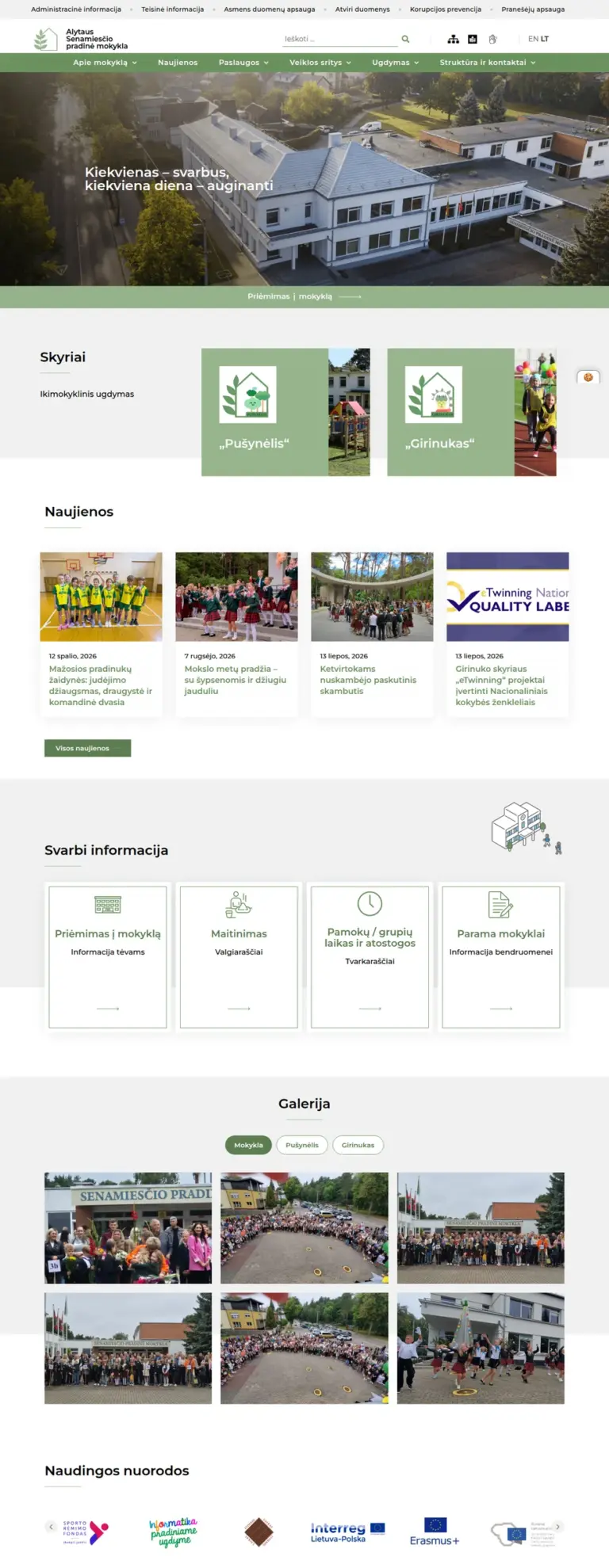
We build a school website so that prospective students, parents and employers quickly find programmes, the admissions procedure, work placements and the most important information in one place.
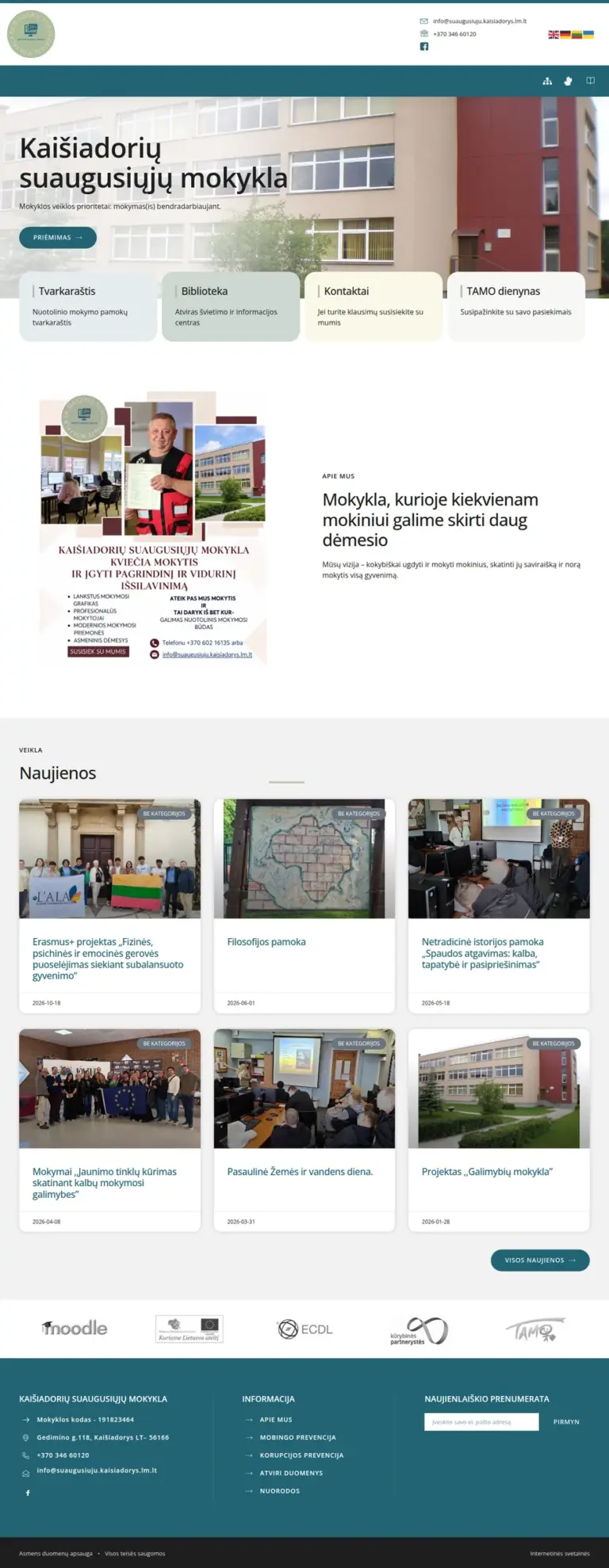
Experience building websites for organisations in the education sector
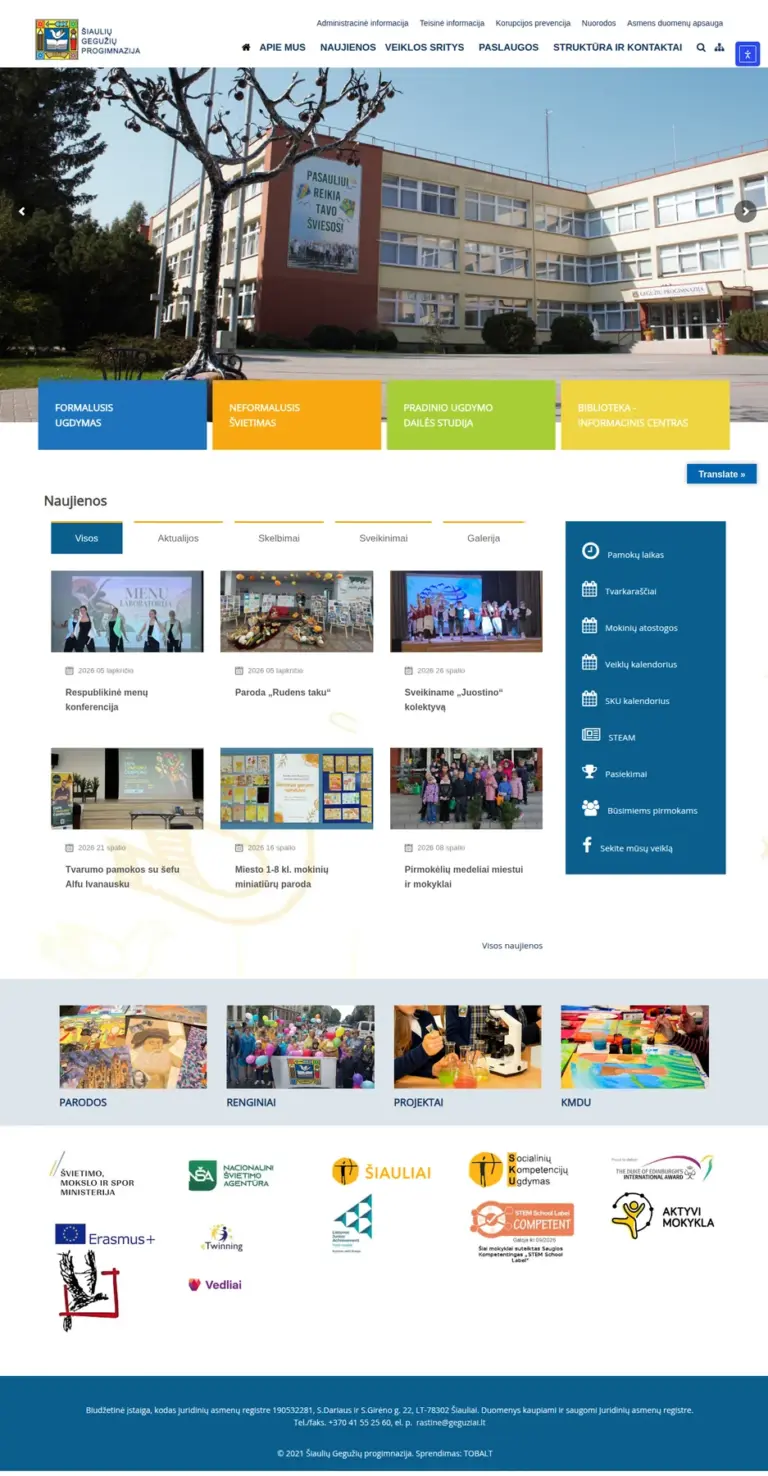
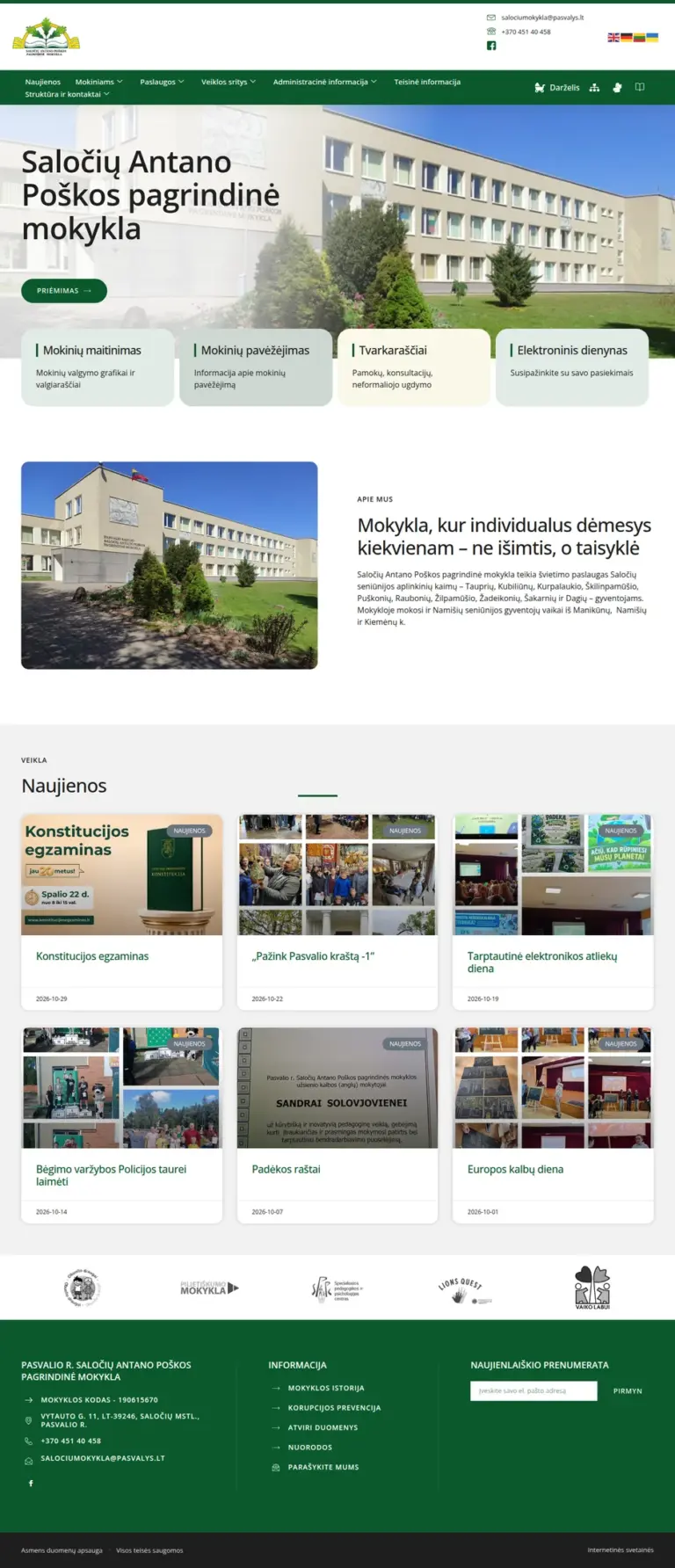
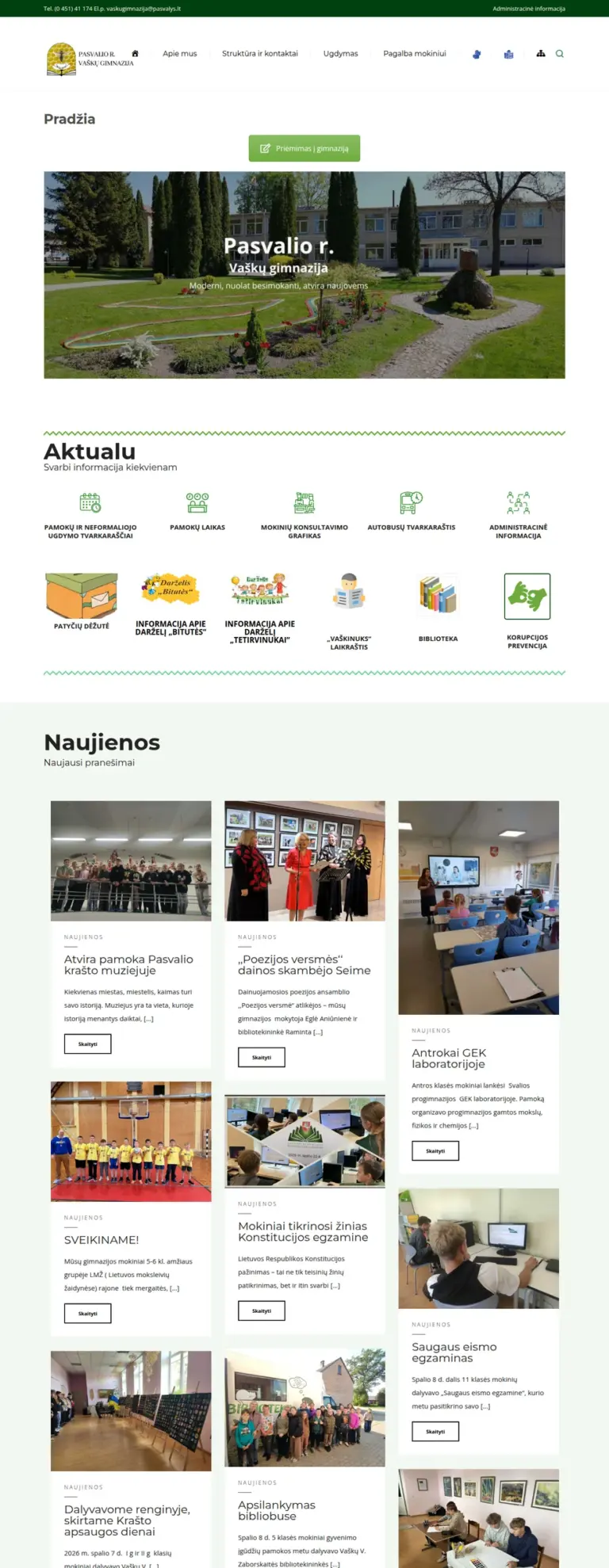
A vocational school’s website has to answer very specific questions: which programmes you offer, how admissions work, where work placements take place and how the modes of study differ. Our website development focuses on clear content, convenient management, accessibility under WCAG 2.1 AA and public-sector requirements. Such websites help not only to present the school but also to save time for staff who answer the same questions every day.
- 8yearsof experience – since 2018
- 30+tools deployed for organisations
- 24monthswarranty on completed work
Most common problems
Admissions and programme information is scattered across different places
Prospective students often have to browse between pages, documents and external links to understand what they can choose and what steps await them when applying. As a result the information seems confusing, and the school keeps getting calls about the same things.
Professions are described in a way that makes real learning hard to picture
Text alone rarely shows what practical lessons look like, what equipment is used and where students later apply what they have learned. Then school websites fail at their most important task — they do not help people understand whether this path is right for them.
Cooperation with employers is not clearly visible on the website
If the website has no convenient place to present partners, work placement opportunities and business involvement, prospective students do not see the link between learning and the real labour market, and employers find it harder to find a way to cooperate.
The admissions process raises many repeated questions
The administration often answers the same questions about deadlines, documents, modes of study, the dormitory or the registration process. When this information is not presented clearly, the workload on staff and the uncertainty for applicants both grow.
What we do
A clear website for programmes, admissions, work placements and communication with employers
Visitors find their way between programmes faster, and your team finds it easier to update descriptions, deadlines and other important information.
A well-organised programme catalogue
On the website you can conveniently present all training programmes with the key information in one place: duration, qualification, admission requirements, mode of study, work placement opportunities and career paths.
Photos, videos and clear examples help show what learning really looks like, not just on paper.
Presenting professions through images and stories
You will be able to show workshops, laboratories, practical sessions, students’ work and the learning environment, so that prospective students see not just the programme name but the real content of the training.
Students and their parents see the practical value of the training more clearly, and employers find information about cooperation more easily.
A section for employers and work placement partners
You will be able to present partner companies, work placement locations, joint projects, graduate employment paths and other information that shows the school’s link with the labour market.
Fewer repeated enquiries for the administration and a clearer path for prospective students from interest to registration.
Clearly structured admissions information
On the website you can present consistent application steps, deadlines, required documents, answers to frequently asked questions and links to external registration systems, so that applicants do not get lost in the process.
The website becomes not only a source of information but also practical help in deciding on a field of study.
Help with choosing a career path and programme
You can offer an interactive solution that helps prospective students find their way among different vocational fields, assess their interests and move on to the descriptions of suitable programmes.
The vocational school attracts students and works with employers more effectively through a catalogue of specialisations and a section for work placement partners.
The school website was updated to meet the requirements. They took the school’s wishes into account during development and advised us afterwards. They answer questions quickly.
Order a careers catalogue for your school
Frequently asked questions
Will our staff be able to change programmes, admission dates and news themselves?
Yes. The website is built so that the team can manage programme descriptions, admissions information, news, documents, partner sections and contacts on its own. No technical knowledge is needed — the content is managed clearly and conveniently.
How do you ensure accessibility under WCAG 2.1 AA?
Accessibility is built in from the very start: a clear structure, appropriate contrast, keyboard navigation, understandable form fields, alternative text and other elements a public-sector website needs. That way the school website becomes more convenient for a wider range of visitors and meets the requirements placed on it.
Can links to admissions systems and external information be presented conveniently?
Yes. We can create clear admissions pages with consistent steps, explanations and links to external systems, so that applicants understand what they have to do and when. This reduces confusion and the number of frequently asked questions.
What matters from a public procurement point of view when ordering a vocational school website?
It is important to clearly define the functional requirements: what content you will manage, which integrations are needed, which accessibility and security requirements apply, and how content management, document publishing, GDPR compliance and technical maintenance will be ensured. We can help formulate a clear scope of service, so that the procurement requirements are practical and match the school’s real needs.